Digital Growth Requires Energy
Artificial intelligence is transforming healthcare, education, industry, science, and public services. But every AI model, cloud service, and digital platform depends on physical infrastructure: data centers, servers, cooling systems, electricity grids, and supply chains. The International Energy Agency states plainly that there is no AI without energy—especially electricity for data centers.
As AI use expands, the environmental challenge is becoming clearer. Data centers consumed about 415 terawatt-hours of electricity in 2024, roughly 1.5% of global electricity use, and the IEA projects this will more than double to around 945 TWh by 2030. The central issue for a sustainable society is therefore not whether to use AI, but how to power and operate it without overburdening the planet’s resources.
Electricity Is Only Part of the Footprint
Data centers affect more than carbon emissions. They also require large amounts of water for cooling, land for facilities and energy infrastructure, and raw materials for servers, batteries, cables, and renewable-energy equipment. The IEA notes growing concerns about the implications of data centers for local electricity systems, prices, emissions, and water use.
The United Nations highlights that AI-related water consumption could reach the equivalent of the basic annual domestic needs of 1.3 billion people by the end of the decade, while the land footprint associated with data centers and power generation may exceed 14,500 square kilometers. These impacts are often local: a data center may bring investment and jobs, but it can also place pressure on a community’s electricity grid and water supply.

Efficiency Must Improve Across the System
Energy efficiency is one of the most important solutions. AI companies can improve hardware performance, optimize software, use better cooling technologies, and design workloads that consume less power. The IEA notes that electricity use per AI task is declining rapidly, but total demand is still rising because more people are using AI and new applications—such as video generation and AI agents—are more energy-intensive.
This means efficiency alone will not solve the problem. It must be combined with responsible growth, better infrastructure planning, and transparency about environmental impacts. The IEA’s High Efficiency Case suggests that stronger progress in software, hardware, and infrastructure efficiency could reduce global data-center electricity demand by more than 15% by 2035. Efficiency should be treated as a shared responsibility among developers, cloud providers, governments, and users.
Clean Energy and Grid Resilience Are Essential
Data centers should be powered increasingly by renewable energy, supported by storage, flexible demand, and stronger electricity grids. The IEA projects that renewables will meet nearly half of the growth in data-center electricity demand through 2035, with wind, solar, hydro, storage, and grid improvements playing major roles.
However, renewable energy alone is not enough if grids cannot handle rapid changes in demand. The UN Economic Commission for Europe warns that data centers and other energy-intensive facilities are being built faster than the power grids needed to supply them, creating risks for reliability and resilience. Future infrastructure planning must therefore consider grid capacity, local energy needs, storage, and demand flexibility—not only the location of new data centers.

Transparency Builds Public Trust
Companies should measure and disclose the environmental impacts of their data centers, including carbon emissions, water use, land use, and effects on local electricity systems. The UN Secretary-General has called on major AI companies to publicly disclose their full carbon, water, and land footprints and to commit to powering data centers with renewable energy by 2030.
Transparency helps communities, governments, investors, and users make informed decisions. It also allows companies to identify where improvements are most needed. A data center that claims to be “green” should be able to show not only its renewable-energy purchases, but also its actual local grid impact, water consumption, cooling methods, and waste-management practices.
AI Can Also Support Sustainability
AI is not only a source of environmental pressure; it can also help solve environmental problems. The IEA notes that AI can support the energy transition by improving grid management, forecasting renewable generation, optimizing energy use, and accelerating innovation in clean technologies.
For example, AI can help utilities predict electricity demand, integrate solar and wind power more smoothly, detect equipment failures, and reduce energy waste in buildings and factories. The challenge is to ensure that these benefits are real, measurable, and widely shared—not outweighed by the growing footprint of AI infrastructure itself.
A Sustainable Digital Future Requires Balance
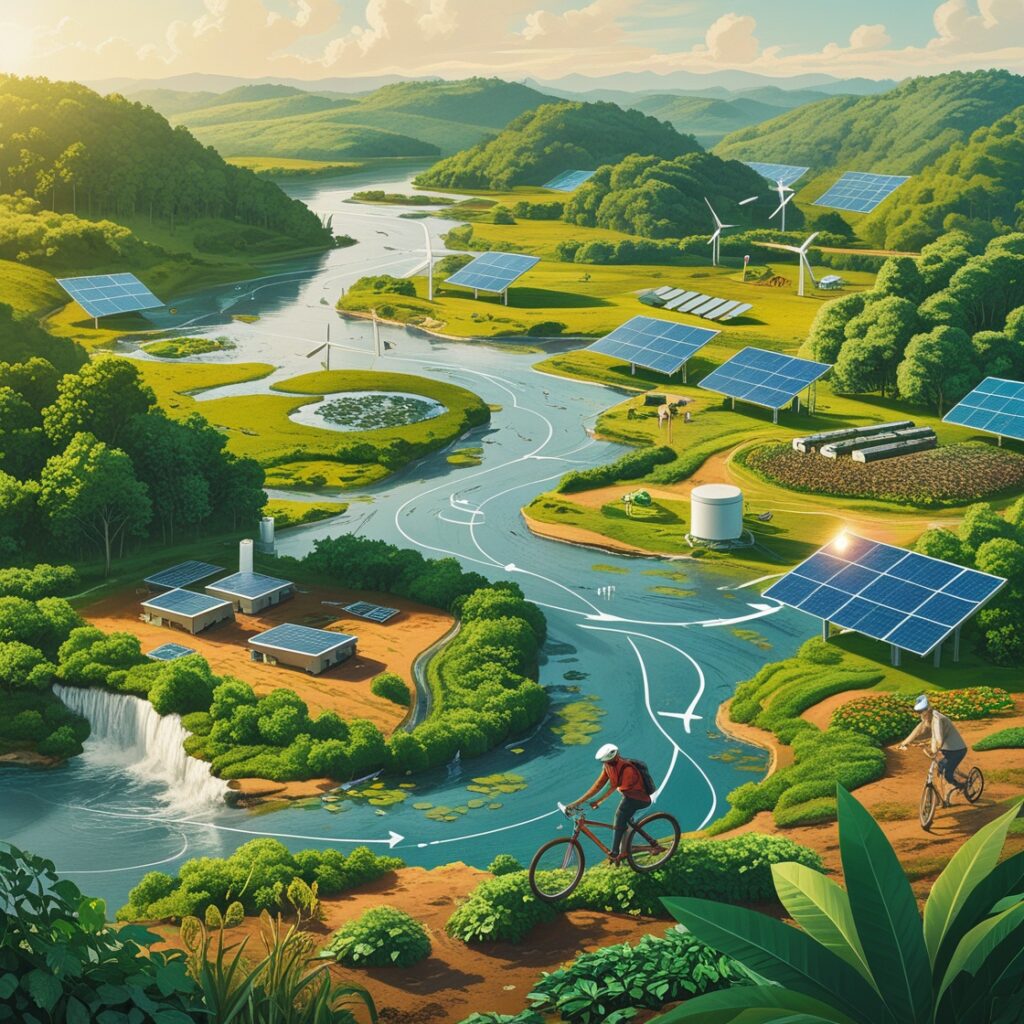
A sustainable society cannot reject digital innovation, but it also cannot ignore its environmental costs. The future depends on balancing three goals: expanding access to useful AI services, protecting energy security and affordability, and reducing pressure on carbon, water, land, and local communities.
This balance requires cooperation among technology companies, governments, utilities, researchers, and local communities. It also requires users to think about how they use AI: choosing efficient tools, avoiding unnecessary high-energy tasks, and supporting companies that disclose and reduce their environmental impact.
AI can be a powerful tool for sustainable development, but only if its infrastructure is designed with the same care as the problems it aims to solve. A truly sustainable digital society will treat energy, water, land, and climate stability as essential resources—not as unlimited inputs for technological growth.