
Innovation Is the Engine of Sustainable Industry
SDG 9 calls for resilient infrastructure, inclusive and sustainable industrialization, and stronger innovation. It is not only about building factories or expanding production; it is about transforming how goods, energy, services, and infrastructure are created and managed. The United Nations describes SDG 9 as the “production engine” of the 2030 Agenda, supporting productivity, job creation, technological upgrading, and structural transformation.
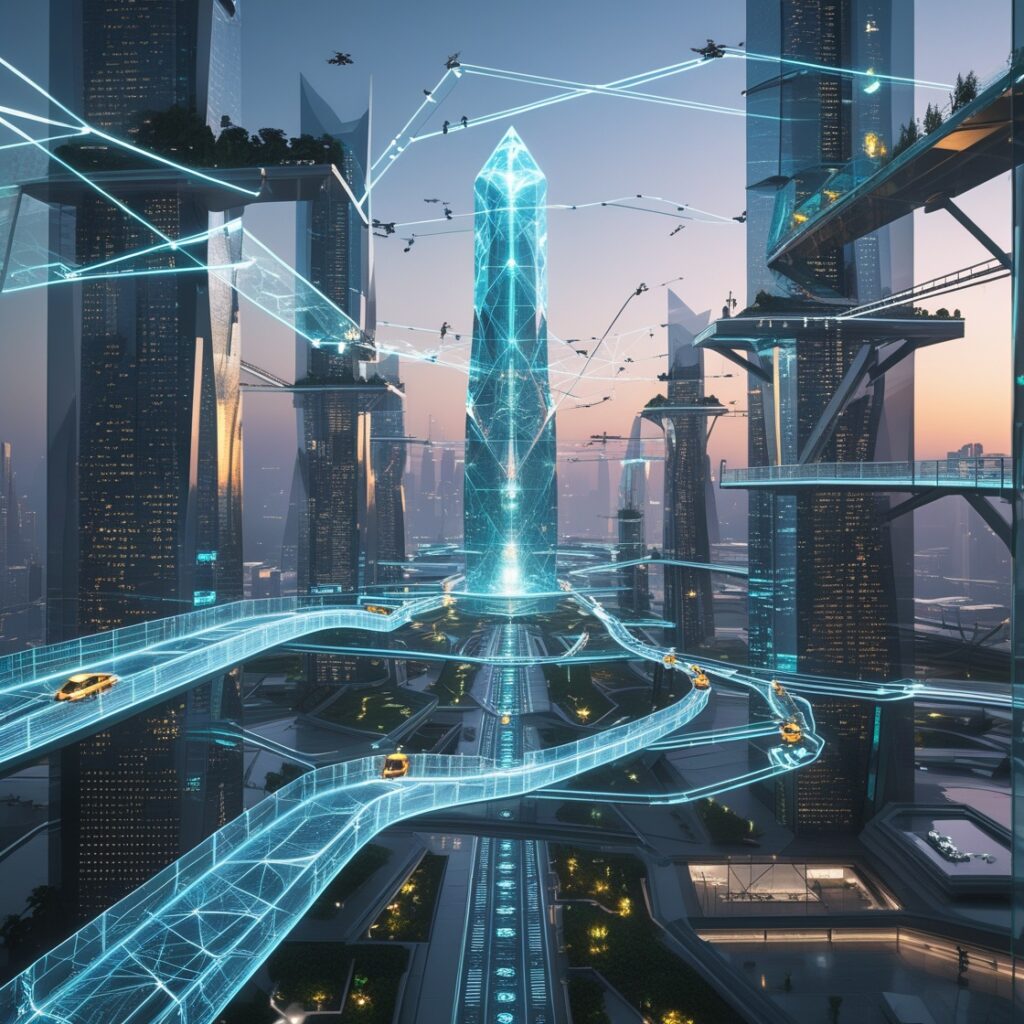
Future industrial growth will depend on technologies that improve efficiency while reducing environmental impact. The most promising innovations are those that connect digital tools, clean energy, advanced manufacturing, and circular-economy systems. Together, these technologies can help industries become more competitive, resilient, and sustainable.
AI and Data: Making Industry Smarter
Artificial intelligence is one of the most influential technologies for industrial innovation. AI can analyze production data, forecast demand, detect equipment problems before failures occur, optimize logistics, and support better decision-making. In manufacturing, it can reduce defects, improve quality control, and lower material waste. In energy systems, it can balance electricity supply and demand more efficiently.
The UN notes that AI is transforming production, logistics, and energy efficiency, while also emphasizing that digital divides and limited skills still restrict participation in many regions. AI’s value increases when it is combined with sensors, cloud platforms, and digital twins—virtual models that allow companies to test changes before applying them in the real world.
AI-enabled tools are also becoming more accessible. The UN highlights lightweight AI applications for low-bandwidth and offline settings, including pest detection for farmers, local-language tutoring, water and air-quality monitoring, and finance tools for small enterprises. This suggests that AI-driven innovation can support not only large corporations, but also small businesses and local communities.
Clean Energy and Smart Grids
The transition to clean energy is a major growth area for industry. Solar power, wind power, battery storage, hydrogen, and smart grids are changing how electricity is produced, stored, and distributed. These technologies are essential for reducing emissions and building more resilient energy systems.
SDG Target 9.4 calls for upgrading infrastructure and industries to make them more sustainable, with greater resource efficiency and wider adoption of clean and environmentally sound technologies. The UN also emphasizes that industrial innovation can reduce the cost of renewable energy, improve energy efficiency, and expand access to clean technologies.
A particularly promising development is the “everything-to-grid” concept, where electric vehicles, batteries, and buildings can act as distributed energy assets that supply electricity back to the grid. The World Economic Forum identifies this as an emerging technology with the potential to reshape energy systems. For industries, this creates opportunities in battery technology, grid software, electric mobility, and energy-management services.
Advanced Manufacturing and Robotics
Robotics, automation, and advanced manufacturing are expected to play a growing role in industrial transformation. Robots can perform repetitive or dangerous tasks, improve precision, and support production in sectors such as automotive, electronics, healthcare, and food processing.
The UN’s SDG 9 discussions identify AI and advanced manufacturing as technologies that can raise productivity, improve resource efficiency, and support the shift toward low-carbon industrial systems. Robotics can also support renewable energy, environmental monitoring, and safer working conditions. Research on robotics and sustainable development finds that these technologies can contribute to economic growth, clean energy, ecological conservation, and improved living standards.
The key challenge is to ensure that automation creates good jobs rather than simply replacing workers. This requires investment in reskilling, education, and inclusive employment policies.
Circular Economy and New Materials
Circular-economy technologies are becoming central to sustainable industry. Instead of following a linear model—take, make, use, dispose—circular systems aim to keep materials in use for longer. This includes recycling technologies, repair services, remanufacturing, biodegradable materials, and systems that turn waste into valuable inputs.
The UN highlights circular-economy approaches that transform waste streams into industrial inputs such as bio-fertilizers, eco-cement, and biodegradable materials. It also notes that recycling alone is not enough; systemic redesign is needed to eliminate waste and pollution, circulate products and materials, and regenerate nature.
New materials are another promising field. Innovations in passive cooling materials, low-impact construction materials, alternative proteins, and precision fermentation can reduce resource use and create new markets. The World Economic Forum includes precision fermentation and passive radiative cooling materials among technologies that could reshape food, manufacturing, and materials supply chains.
Inclusive Innovation Will Decide the Future
Technology alone will not guarantee sustainable growth. The benefits of AI, clean energy, robotics, and circular-economy systems must reach small enterprises, developing countries, rural communities, and workers whose jobs are changing. SDG 9 specifically calls for supporting domestic technology development, strengthening research capacity, and improving access to finance and value chains for small enterprises.
The UN stresses that progress requires investment in basic infrastructure, digital connectivity, applied research, and industry–research partnerships. It also highlights the need for technology transfer, co-development, and international cooperation rather than one-way diffusion of technology.
The most successful technologies of the future will be those that are scalable, affordable, locally adaptable, and environmentally responsible. When innovation serves both economic growth and social inclusion, industry can become a powerful force for achieving the SDGs.