
AI Is Changing How Companies Create Value
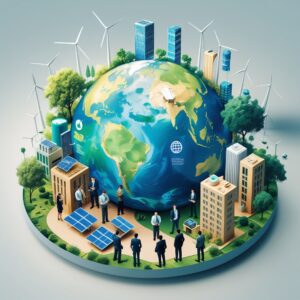
In the AI era, companies are no longer valued only by the products they sell or the profits they earn. They are increasingly judged by how they create value for customers, workers, communities, and the planet. Artificial intelligence can help businesses redesign their operations around efficiency, transparency, inclusion, and long-term sustainability.
The UN Global Compact notes that AI has the potential to “turbocharge” progress toward the SDGs, while stressing that companies must also foster AI talent and ensure ethical governance. The private sector, which accounts for more than 60 percent of global GDP, has a key role in driving innovation and generative AI for sustainable development.

From Selling Products to Delivering Outcomes
Traditional business models often reward companies for selling more products, regardless of whether those products are used efficiently or discarded quickly. AI-enabled business models can change this logic. For example, companies can offer “product-as-a-service” models, where customers pay for access, performance, or outcomes rather than ownership.
This can encourage durability, repairability, sharing, and resource efficiency. A company that leases lighting, mobility, or machinery has an incentive to keep products working for longer and to recover materials at the end of their life. The UN Global Compact highlights that generative AI can unlock new business models, drive innovation, and help advance the SDGs. It also emphasizes that companies can use generative AI to rapidly prototype and deploy sustainable solutions for emerging social and environmental needs.
AI Can Make Supply Chains Visible
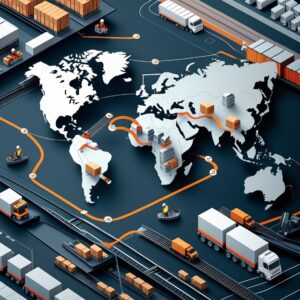
Many sustainability problems are hidden in supply chains. Companies may not know exactly where raw materials come from, how much energy a supplier uses, or whether workers are treated fairly. AI can help analyze large amounts of data from suppliers, logistics systems, satellite imagery, sensors, and public records.
AI-driven models can improve climate forecasting, support early-warning systems, and optimize renewable-energy deployment. Businesses can also use AI for supply-chain optimization and the development of sustainable products. When companies can see risks earlier, they can respond before problems become environmental disasters or human-rights violations.sdgs.

New Models Can Reduce Waste
AI can support circular business models by helping companies predict demand, extend product life, and recover valuable materials. For example, AI can identify when equipment needs maintenance, recommend repair options, match used goods with new users, or improve sorting in recycling facilities.
Large-scale AI models can process complex data, recognize patterns, and generate innovative solutions for sustainability challenges. They can also help companies optimize energy use; one example cited by the UN is Google DeepMind’s reported 40 percent improvement in data-center energy efficiency. These applications show that AI can help turn sustainability from a reporting exercise into a practical operating strategy.
Inclusion Must Be Part of the Model
AI-era business models will only support the SDGs if they include people who have historically been excluded from digital economies. Small businesses, rural communities, women, older people, and people with disabilities should be able to access AI tools, digital skills, and new markets.
The Global Digital Compact encourages international partnerships on AI capacity-building, education and training, access to open AI models and systems, and participation by micro-, small-, and medium-sized enterprises in the digital economy. The UN also encourages the development of open-source software, open data, open AI models, and open standards that benefit society as a whole. A sustainable AI business model should widen opportunity, not concentrate it.

Responsible AI Requires Governance
AI can create serious risks: bias, privacy violations, misinformation, job displacement, and environmental costs from energy-intensive computing. The UN Global Compact warns that the energy use of large AI models can contribute significantly to carbon emissions if not managed sustainably.
It therefore calls for a principles-based approach to responsible business, grounded in respect for human rights, the environment, labor, and anti-corruption. It also emphasizes human oversight, ethical governance, and alignment of AI strategies with the UN Global Compact’s Ten Principles. Companies should assess not only whether AI improves efficiency, but whether it protects people, reduces inequality, and respects planetary boundaries.
Business Models Must Serve the SDGs
The most promising AI-era business models will not simply automate existing practices. They will redesign value creation around sustainability. Examples include renewable-energy platforms, circular marketplaces, precision agriculture, accessible education, inclusive finance, climate-risk tools, and transparent supply-chain systems.
The AI for Good Impact Report notes that new business models can distribute value differently, aiming to reduce inequality and fairly reward contributors. The UN Global Compact also highlights the importance of innovative partnerships, financing mechanisms, and frontier technologies in addressing climate change, resource resilience, economic inequality, and the ethical use of AI.

A Future Where Profit and Purpose Align
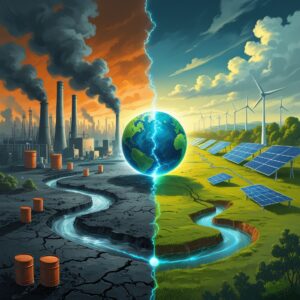
AI will not automatically create a sustainable society. Its impact depends on the choices companies make about what to build, who benefits, how data is used, and how success is measured. The UN Global Compact stresses that companies should balance innovation with inclusivity, sustainability, and fairness.
AI-era business models can make the SDGs achievable when they combine technological capability with ethical responsibility and social purpose. When companies use AI to reduce waste, expand access, strengthen transparency, and create inclusive economic opportunities, they can turn digital transformation into a force for a more sustainable and equitable future.